
Emotive Health
An AI scribe designed to protect the moment between clinician and patient.
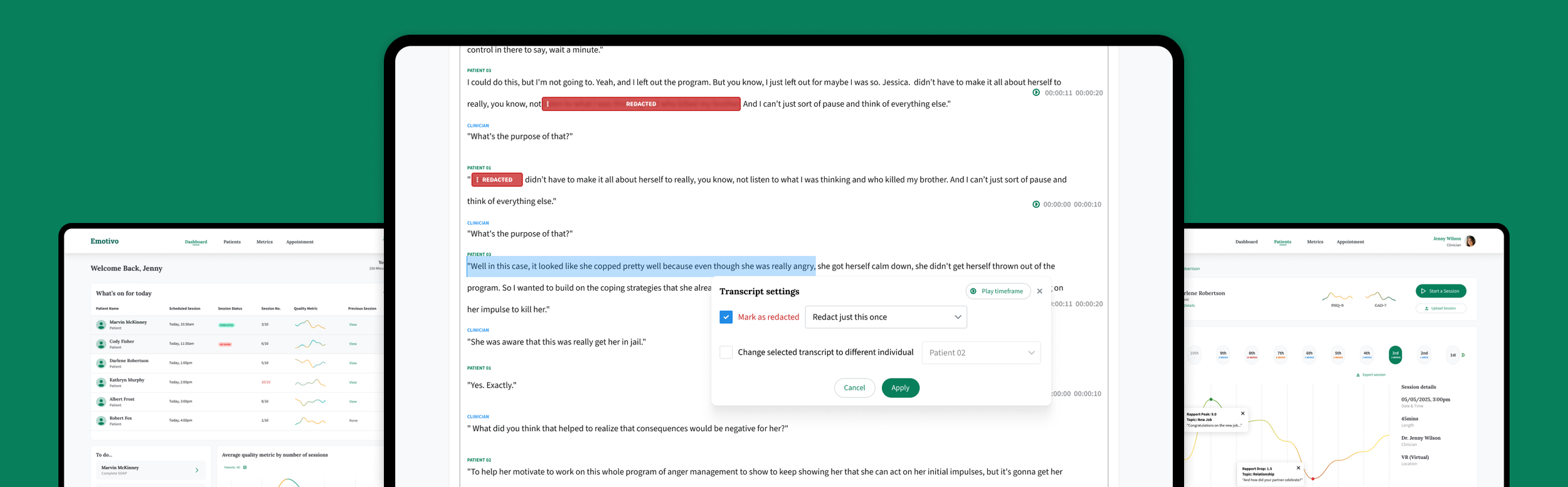
MY ROLE
Head Product Designer
TEAM
Product Manager, Clinicians
TOOLS
Figma, User-Interviews
TIMELINE
Concept → V1 launch
CONTEXT
Built for the room, not just the report
Emotive Health is a digital health platform that supports counselling clinicians during live sessions. Its core product is an AI-powered scribe that listens to therapy sessions, generates structured clinical notes, and produces session reports that meet professional and accreditation standards.
I led product design end-to-end — from the live session experience through to reporting, clinic oversight, and operational scale — working directly with the founder, a product manager, and a small group of practising clinicians who tested the product with me at every stage. I was also responsible for understanding how the product needed to integrate with US healthcare infrastructure, including Electronic Health Records (EHR) systems and insurance providers.
PROBLEM
Documentation was pulling clinicians out of the room
Clinical note-taking is time-consuming and cognitively demanding — and every moment spent writing is a moment pulled away from the person in front of you. Clinicians needed to capture accurate, structured notes and track client progress without breaking the therapeutic relationship. At an organisational level, clinics and larger providers needed visibility into session quality and outcomes — without micromanaging individual clinicians, and without compromising patient trust.
The design challenge: build an AI-driven system that reduces cognitive load during a session, protects patient confidentiality by default, and fits into healthcare infrastructure that was never built with AI in mind.
Capture accurate, structured notes without breaking eye contact or flow
Track client progress across sessions and over time
Meet documentation standards for audits, insurance, and accreditation
Scale from solo practitioners to multi-clinic organisations
Give organisations visibility into quality without surveillance-style oversight
Maintain patient trust and confidentiality at every step
RESEARCH & INSIGHTS
Grounded in real sessions, not assumed workflows
We had direct access to practicing clinicians throughout discovery and every iteration that followed, which let us test ideas against real workflows rather than assumptions. Research covered clinical note-taking habits and pain points, common documentation frameworks (SOAP, DAP, BIRP), and the sensitivity clinicians felt around being recorded during therapy.
What clinicians told us
"How can I make sure sensitive information won't be exposed?"
— clinician, discovery interview, on recording during session
"I use SOAP, but I know other counsellors will use their own system…"
— clinician, on documentation frameworks
"How can I track progress across multiple clinics?"
— clinic operations lead
"I don't want to be interrupted during the session."
— clinician, on the scribe's presence
What that shaped
Documentation needed to adapt to different therapeutic frameworks, not force one on every clinician.
Larger organisations needed oversight tools that read as quality assurance, not surveillance.
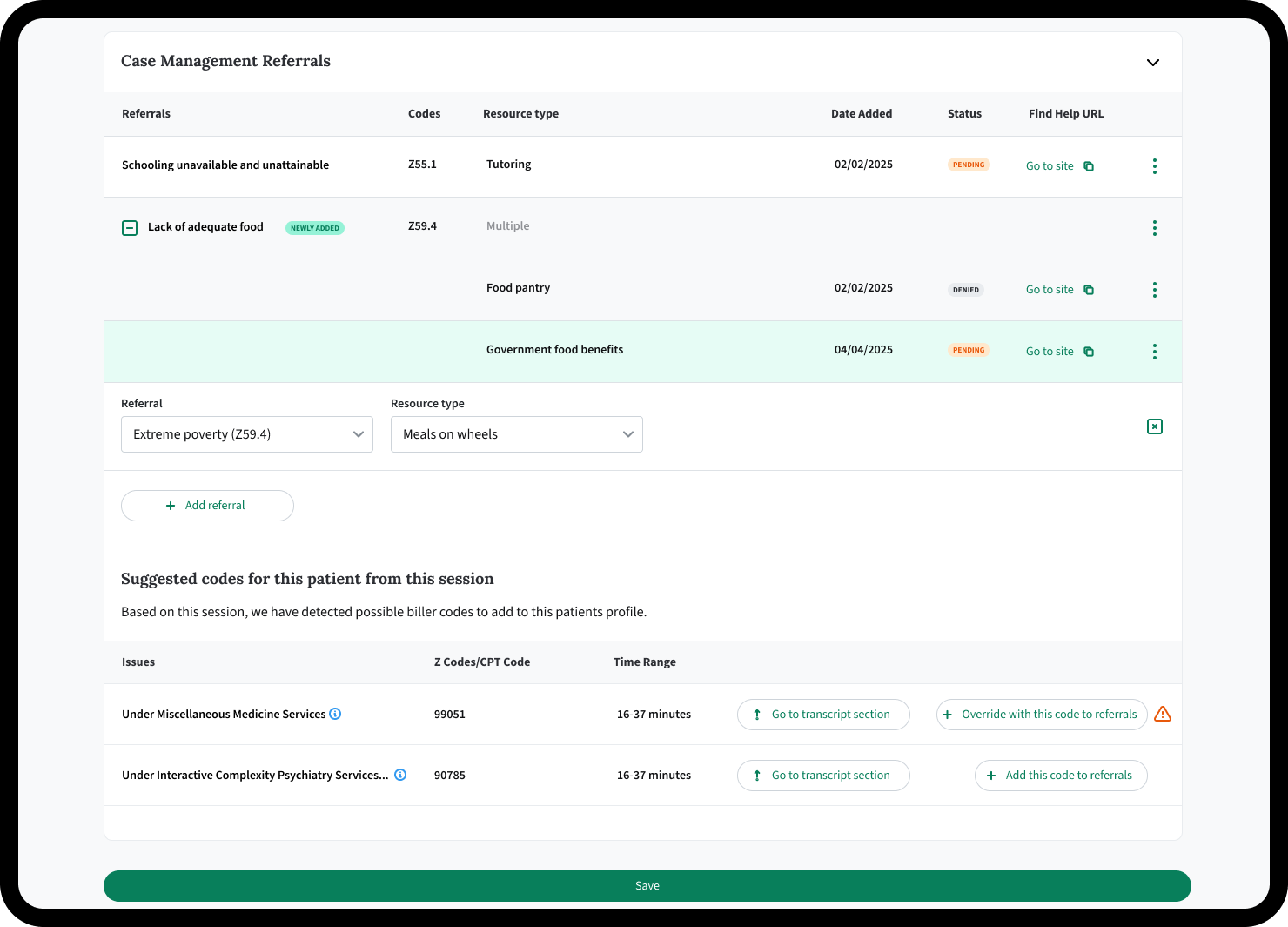
Social and environmental factors (captured via ICD-10 Z-Codes) were often under-documented but critical to care quality — this became a dedicated feature, not an afterthought.
The product needed to be present but invisible during a session, with control handed back to the clinician at every point.
PROCESS
Balancing clinical empathy against regulatory reality

Early work centered on mapping a live session flow that felt calm and clinician-controlled, the post-session workflow for reviewing and approving notes, and organisational views for supervisors and operations teams. Prototypes were tested with clinicians on how they interacted with the scribe during real sessions, how comfortable they felt with the "listening" state, and how easily they could review and finalise documentation afterward.
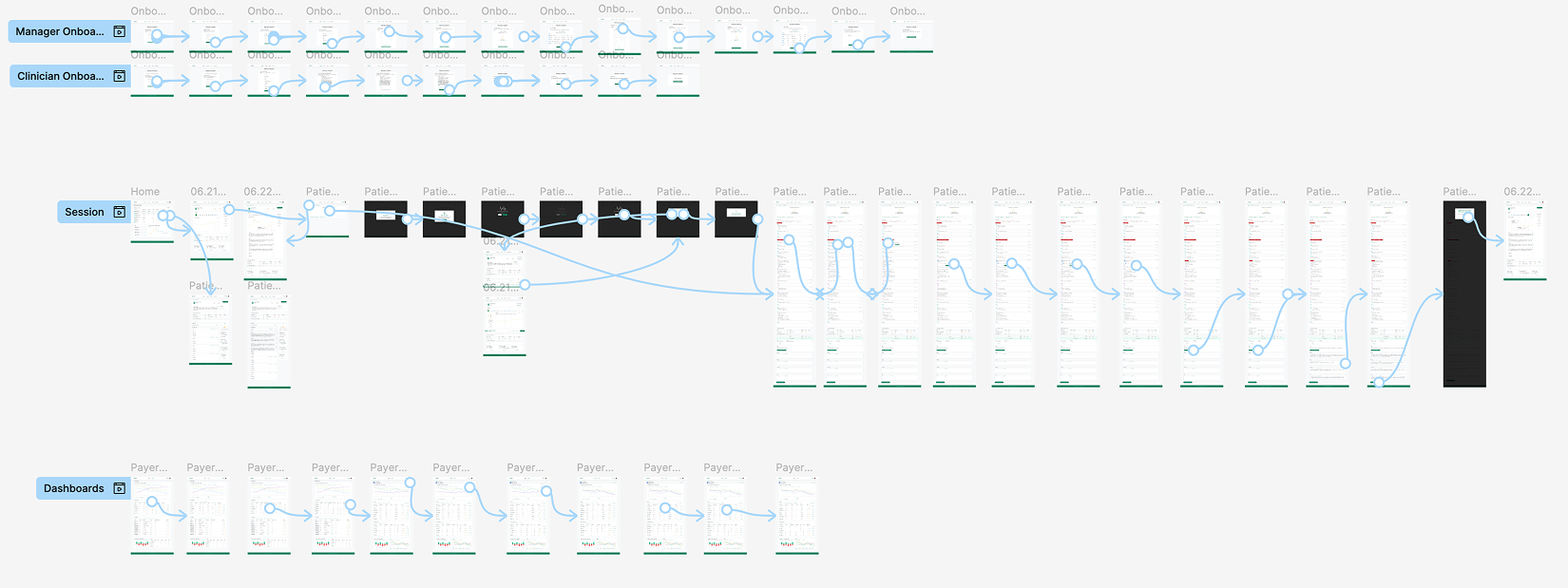
Early prototypes
Designing for three users
Clinicians, supervisors, and administrators each needed a different view of the same underlying data.
Solo to enterprise
The same system had to work for one practitioner and for organisations running many clinics.
Transparent AI
Every AI output stayed editable and visible — nothing was written to a record without the clinician seeing it first.
SOLUTION
A scribe built around trust, clarity, and scale
The final product delivered a comprehensive AI scribe and clinical management platform, structured around three connected experiences.
AI Scribe & Session Experience
Live session listening with a darkened, low-distraction interface
Clear confirmation states so clinicians could trust the system was active
Full transcript with speaker recognition, including group sessions with multiple speakers
Automatic redaction of sensitive information, with manual override always one tap away
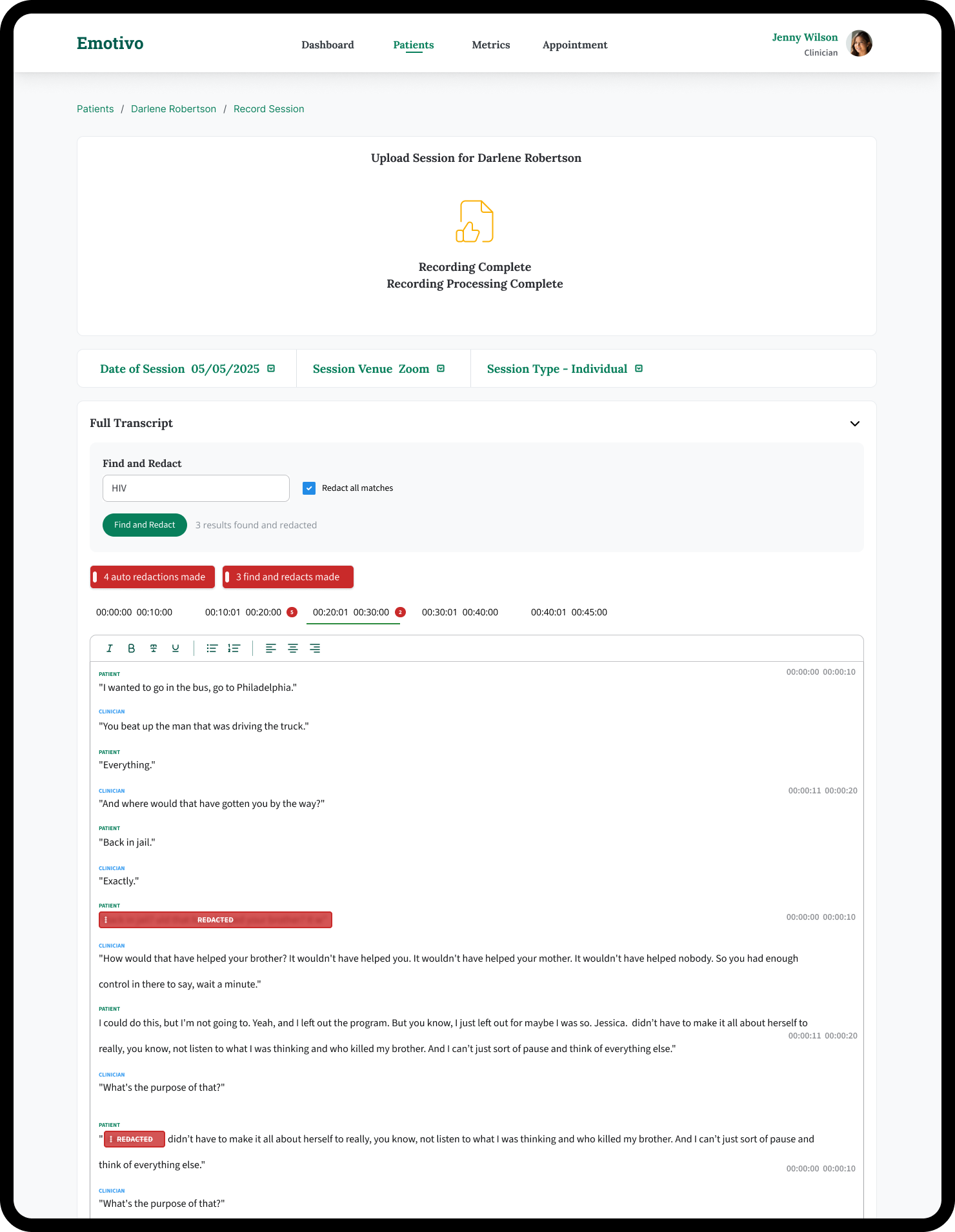
Live transcript with speaker recognition, distinguishing clinician from patient in real time.
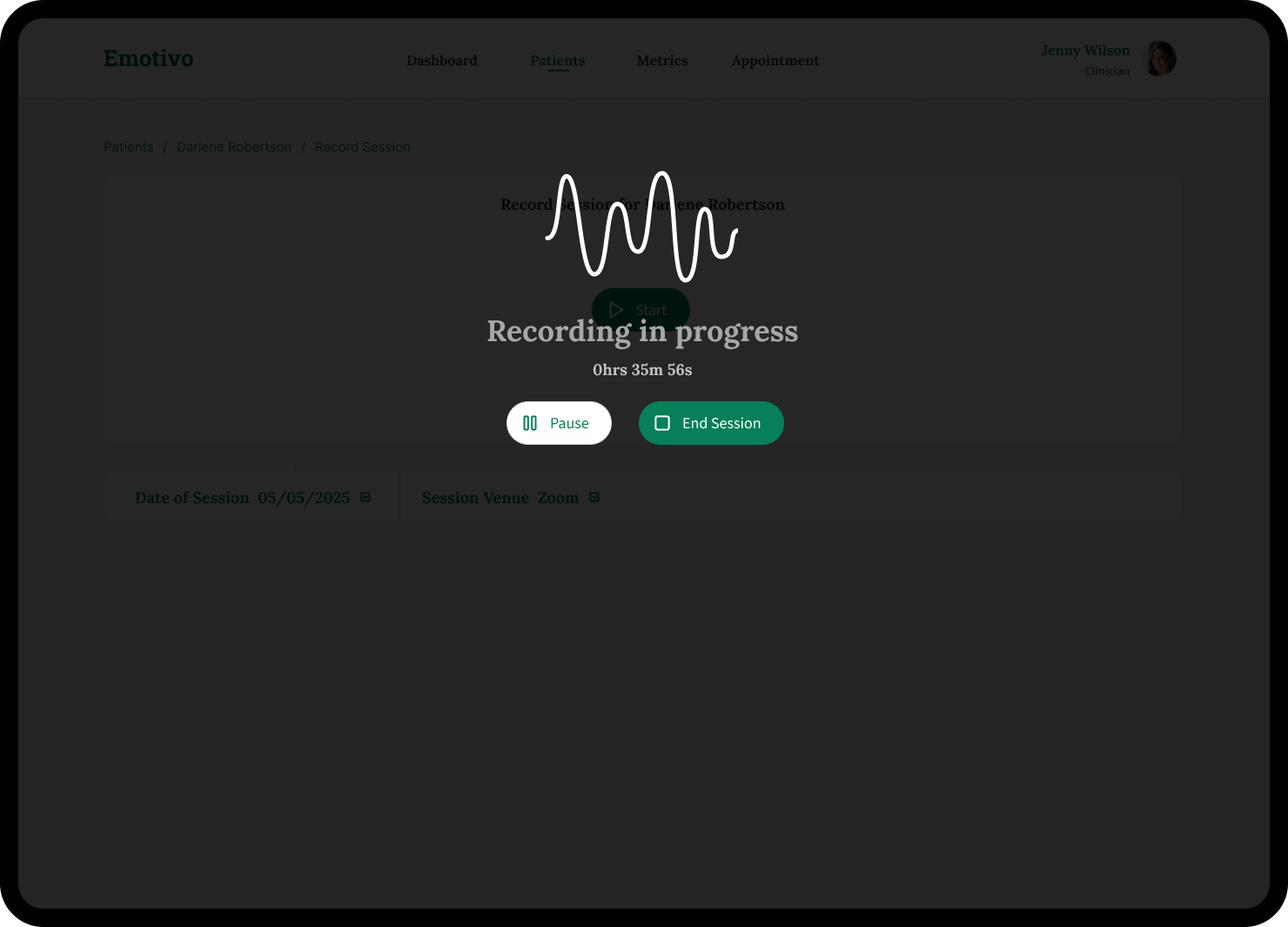
Confirmation state — a deliberately calm, low-distraction signal that the scribe is listening.
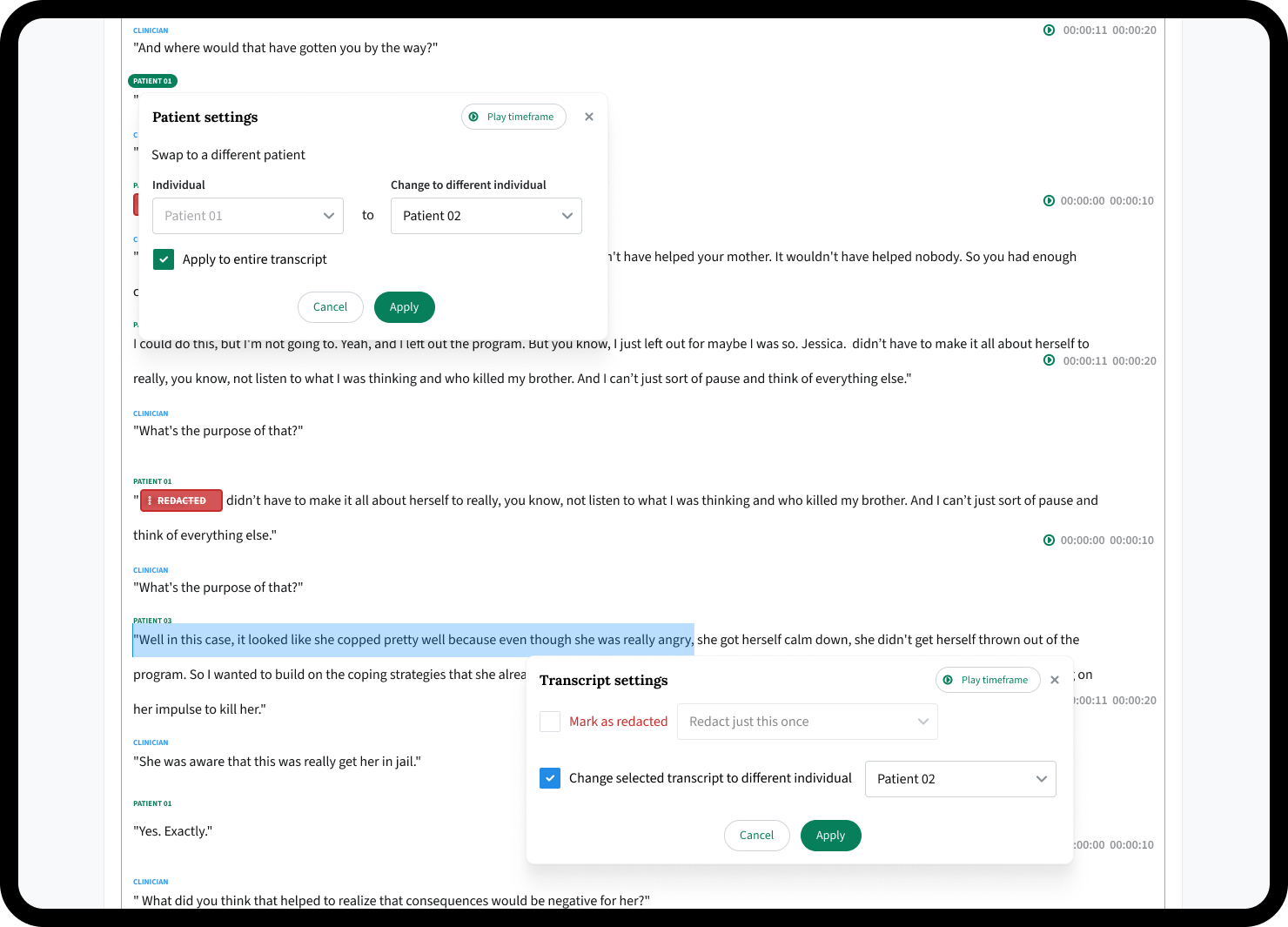
Manual redaction layered over automatic detection, so clinicians keep the final say on what's kept.
Clinical Notes & Reporting
Structured notes aligned to SOAP, DAP, BIRP, and custom templates
Session reports that meet accredited clinical documentation standards
Automatic detection and suggestion of relevant ICD-10 Z-Codes
Progress and rapport tracked across the full course of care
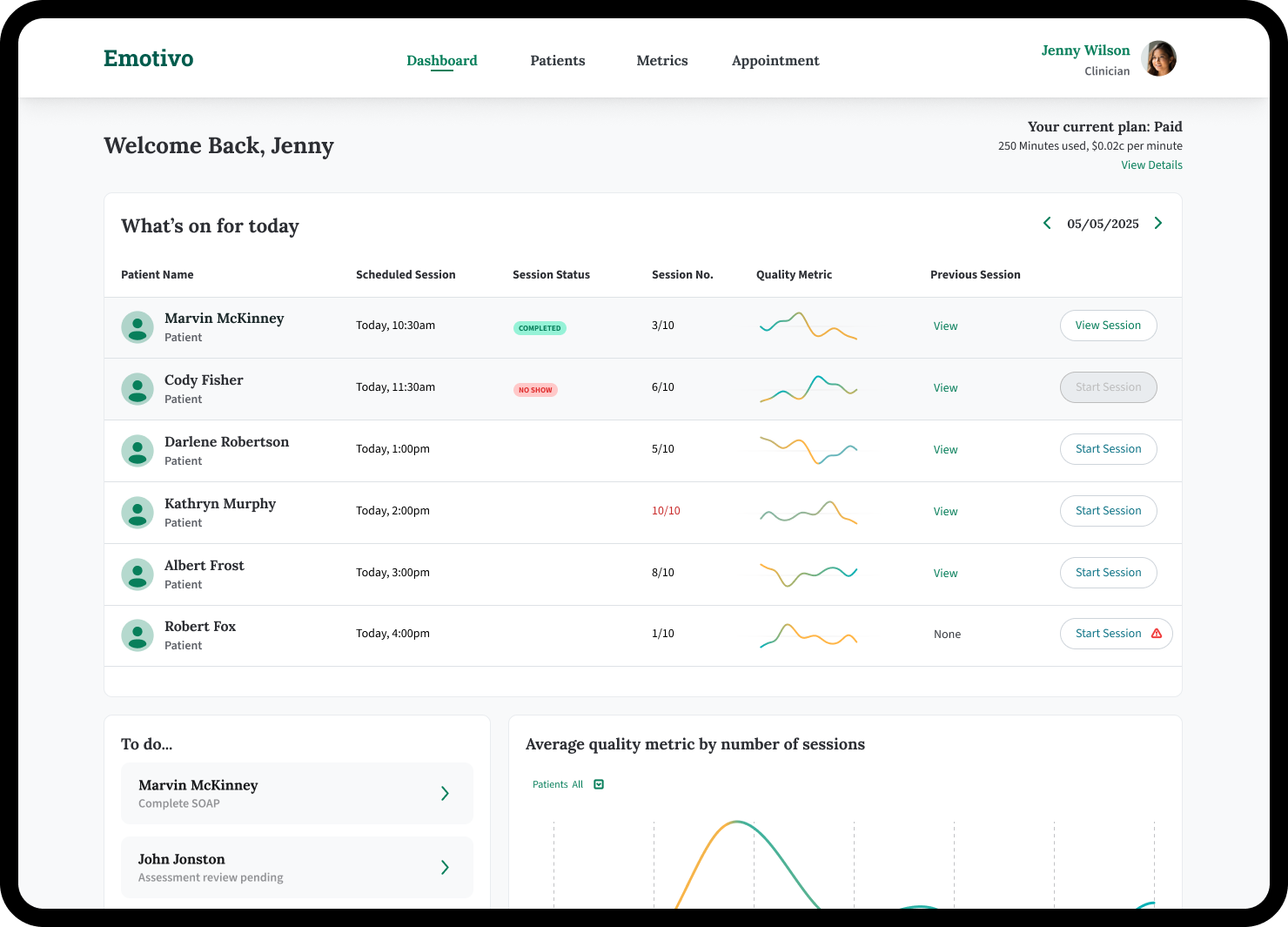
A clinician's caseload at a glance — the daily starting point of the app.
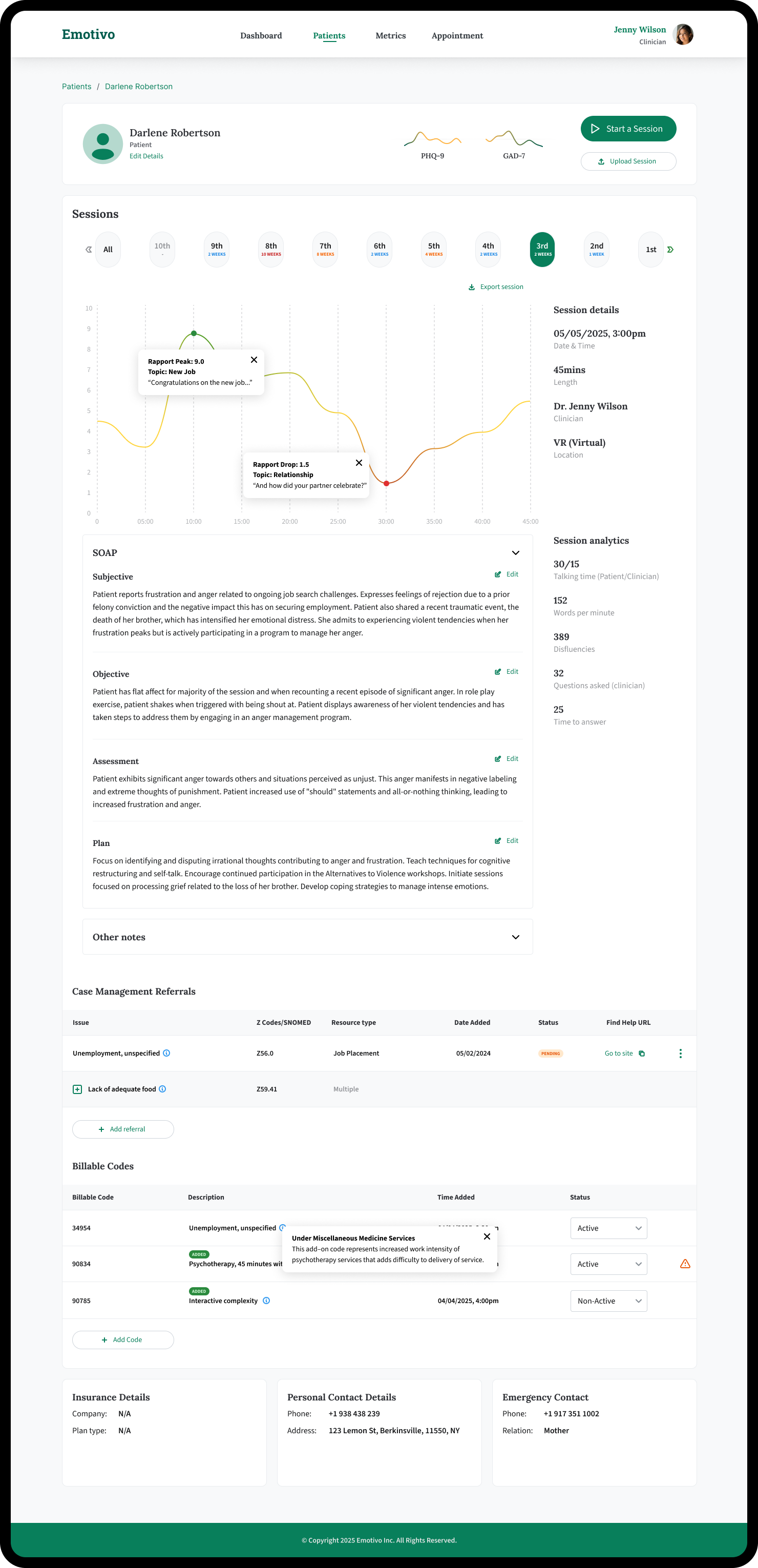
Patient detail view, tracking progress and history across every prior session.
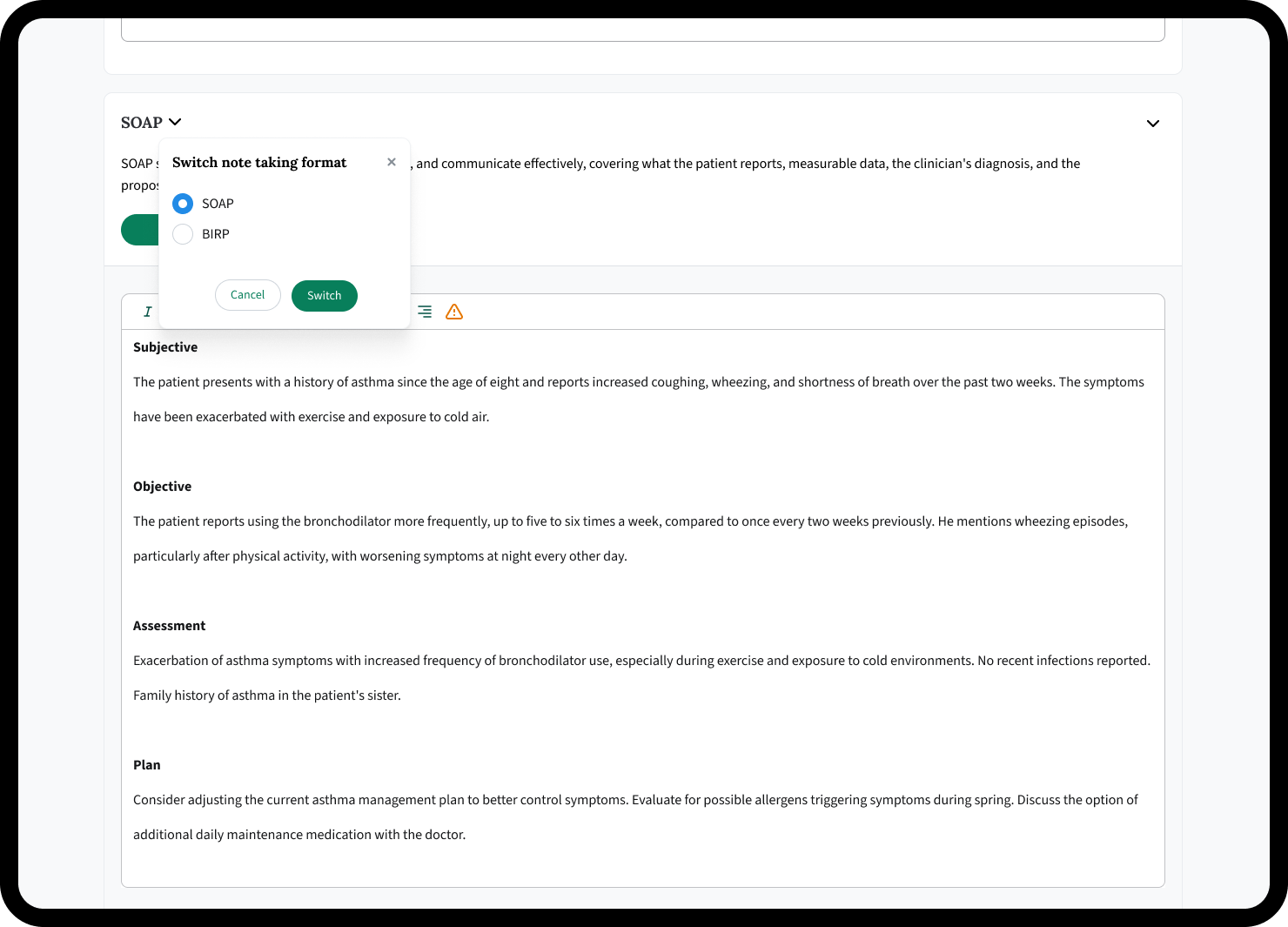
Notes generated from the session, editable before anything is saved to the record.
Operational & Organisational Views
Visibility into individual clinician activity and quality
Patient engagement and outcome tracking
Clinic-level and organisation-level performance, built to scale from one practitioner to many clinics
Case management links the raw transcript directly to the structured record.
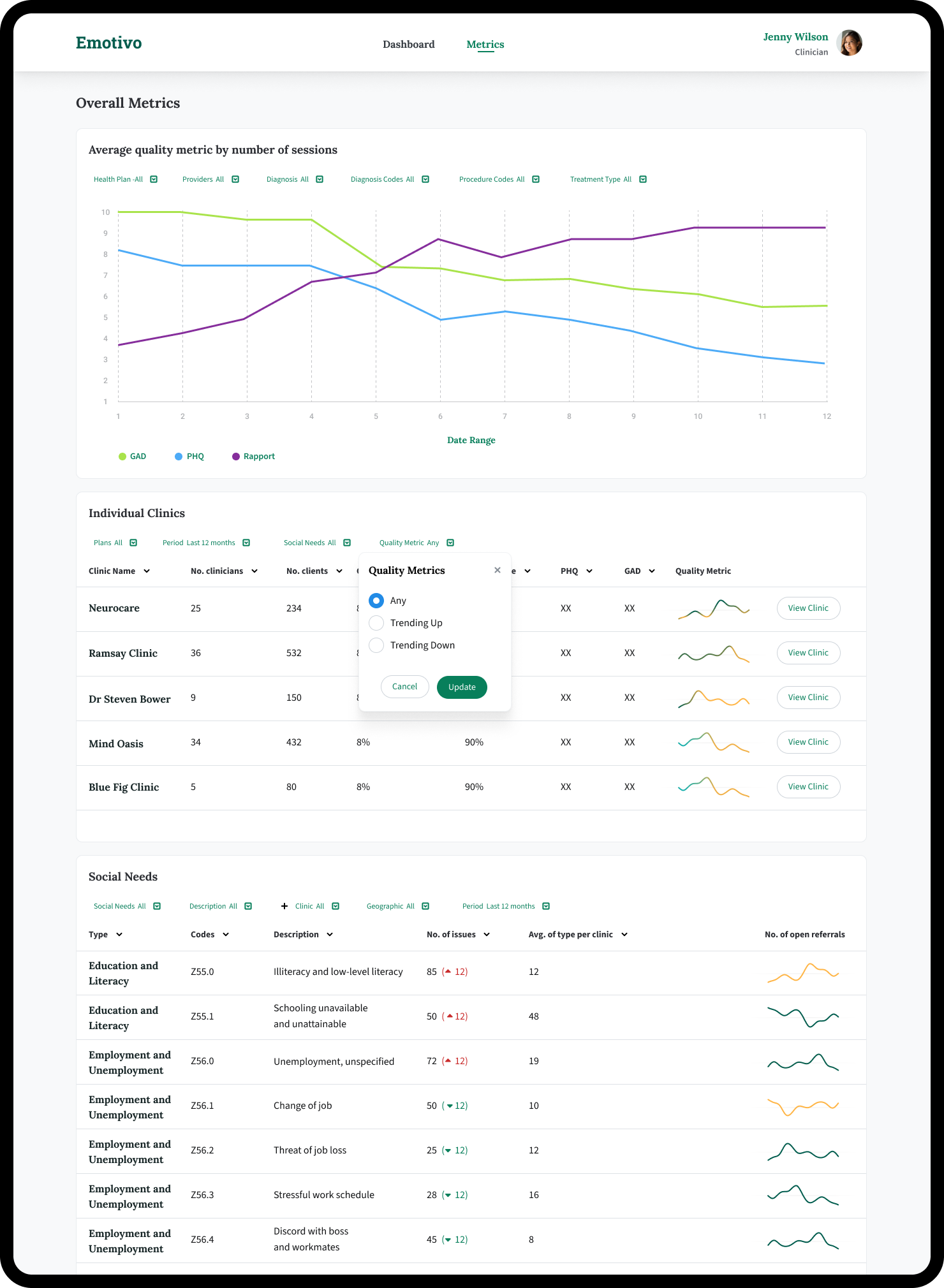
A single clinic's detail view — activity and outcomes without naming individual sessions.
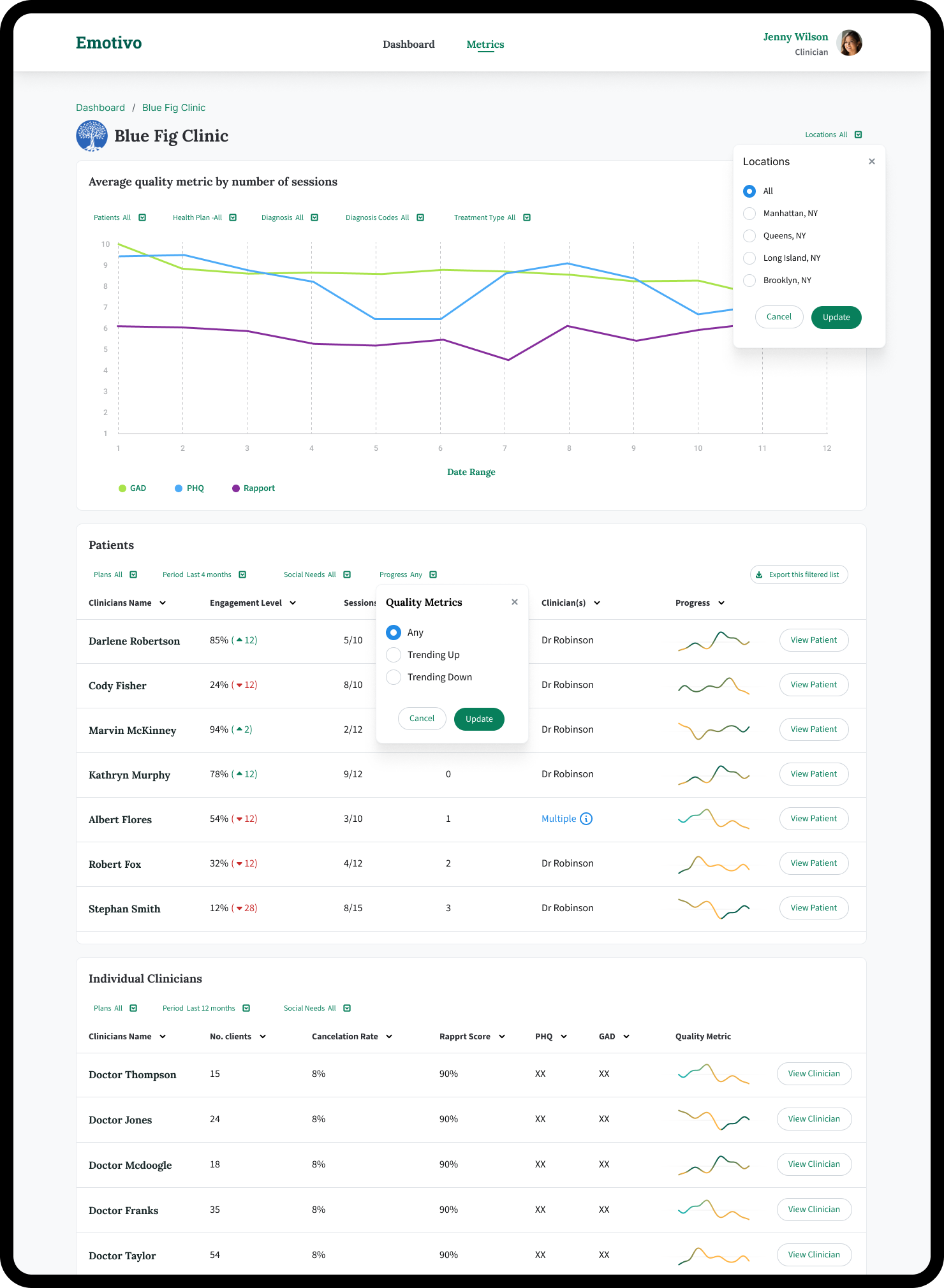
Clinic-level rollup for operations teams overseeing multiple locations.
Browser Plugins
Firefox and Chrome extensions to start sessions instantly
Removed the need to log into the main platform before every session
Reduced friction at the exact moment a session begins
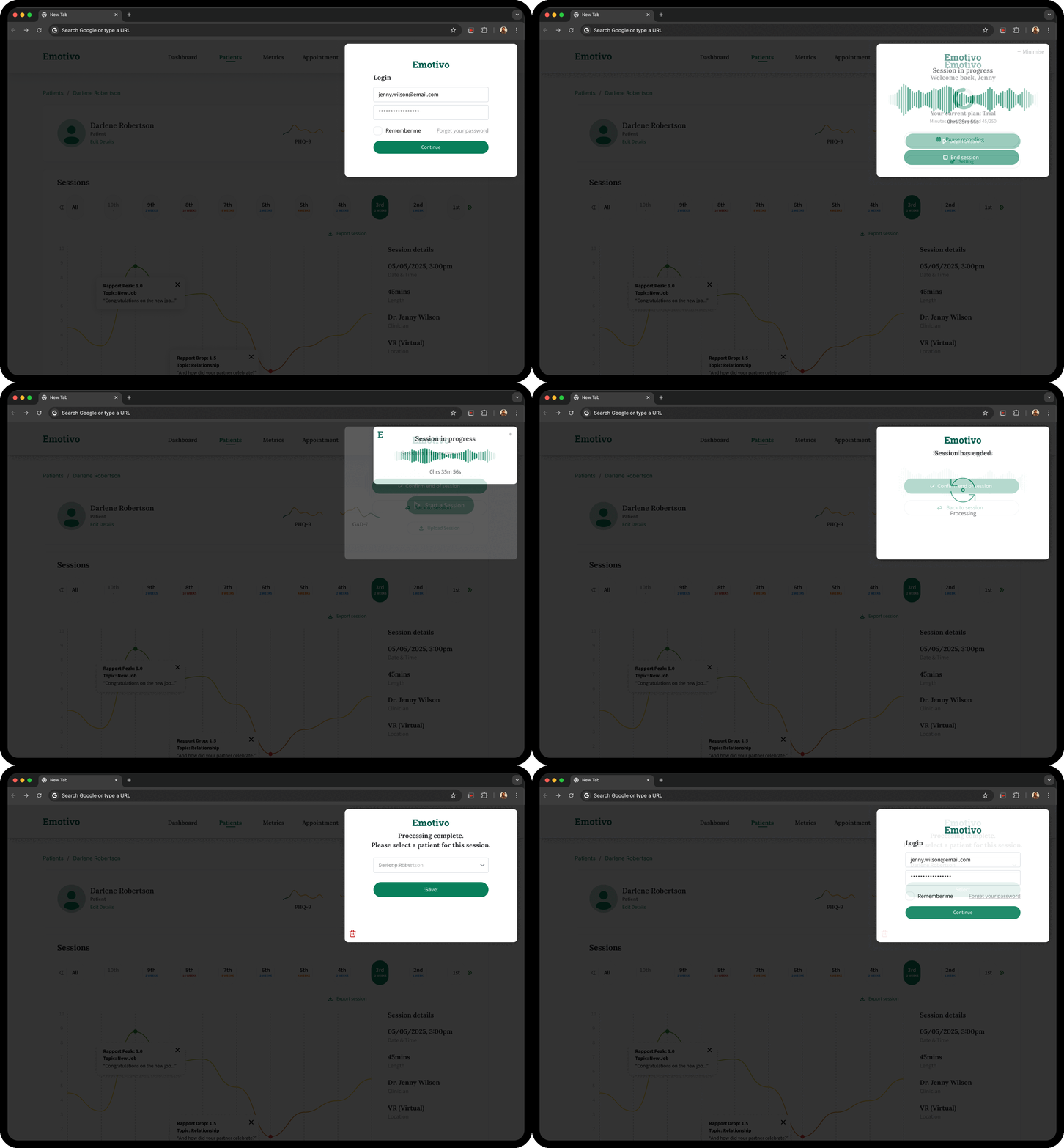
One click to start a session — no login, no context switch, right when it matters most.
IMPACT
Less admin, more presence
The Emotive Health application reduced administrative burden while improving documentation quality and consistency — letting clinicians stay present with patients instead of managing paperwork around them.
67%
improvement in patient interaction time during sessions
42%
reduction in no-shows and cancellations
28%
reduction in unmet mental health needs via Z-Code follow-up
Clinicians could remain fully present with patients during sessions
Documentation quality improved through structured, compliant outputs
Organisations gained visibility into clinical quality without disrupting care
Z-Code support surfaced non-medical factors influencing patient health
Faster session starts via the browser plugin improved day-to-day adoption
REFLECTION
Trust is a design decision, not a feature
This project reinforced that sensitive healthcare tools have to prioritise trust, transparency, and user control — especially once AI enters the room. Designing something that listens to deeply personal conversations meant every decision had to hold up against a clinician's instinct to protect their patient first.
Designing for solo clinicians and enterprise organisations at once required careful abstraction: the same underlying data had to tell very different stories depending on who was looking at it. Integrating clinical standards, EHR systems, and AI into one coherent experience made clear how much strong information architecture — and restraint in the UI — actually does the work.
Ultimately, the project showed how AI can meaningfully support clinicians — not by replacing judgment, but by removing the friction that surrounds the work of care.